Three Examples for Gender Audit of Municipal Budgets
View
Discussion on the possibility of implementing the policy of “housing for all” in Israel
The October war of 2023 led to a sharp increase in the need for mental health services on the part of the general population and especially for specific groups within it, among them persons injured by the Hammas attack or dislocated as a result of that attack and the subsequent war, families whose homes were damaged from rocket fire and soldiers suffering from post-trauma. The widespread distress occurred at a time when Israel’s public mental health services had been suffering for years from a chronic shortage of personnel, unfilled positions and, as a result, the general inaccessability of public mental health services.
This research paper examines the labor market experiences of Ethiopian Israelis who have earned academic degrees. In so doing, it tracks their progression both to higher education and employment, the possibilities and impediments experienced on the way to the work force, their experience of employment, their potential for advancement once employed, and the reasons for the gaps in remuneration between this social group and the general population.
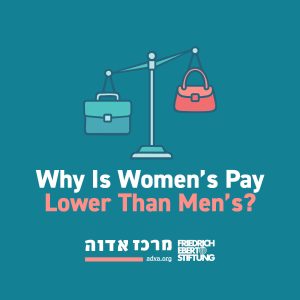
An infographic presentation based on a study by the Adva Center in cooperation with the Friedrich Ebert Foundation on gender pay gaps in Israel.
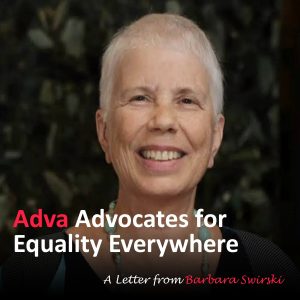
Adva’s founder shares her reflections on three decades of advancing social equality and gender mainstreaming in Israel.
For the first time, the Israel Ministry of Labor published data about workers paid by the hour, and as it turns out, the situation is dismal: Employment by the hour has become a widely used method for simply reducing the cost of labor. It is harmful, exploitative and unethical, and in the long run not necessarily economically advantageous.
While the fighting continues with no clear endgame, it dictates Israel’s political and social agenda. It is said that the war is a great leveler; however, the production of weaponry is not: a good portion of the millionaires and billionaires that made their fortunes in Israel in the course of the last two or three decades did so by producing arms based on hi-tech.
A first-of-its-kind study by the Adva Center and ASSAF reveals that approximately half of the refugee and asylum seeker population in Israel lives below the poverty line. About 85% experience food insecurity, over half of them at a severe level. Housing expenditures amount to more than 60% of their monthly income.
This study, supported by Mazon-A Jewish Response to Hunger, deals with salaried and self-employed workers whose income from work is defined as low, that is, no more than two-thirds of the median monthly pay nationwide.
This guide, published by the Jewish Funders Network, is for foundations and funders who are active in Israel and seek to start or deepen their gender-related activism and increase their social impact in this regard. This guide is motivated by the desire to promote discourse, raise awareness, and provide practical tools for implementing a gender approach in Israeli philanthropy.
The human suffering caused by the present war is unprecedented in Israel’s war history. Against this background, the 2025 budget proposal promises Israelis numerous “dark years” — years without a social agenda.
Don't miss our latest updates