Three Examples for Gender Audit of Municipal Budgets
View
Discussion on the possibility of implementing the policy of “housing for all” in Israel
The October war of 2023 led to a sharp increase in the need for mental health services on the part of the general population and especially for specific groups within it, among them persons injured by the Hammas attack or dislocated as a result of that attack and the subsequent war, families whose homes were damaged from rocket fire and soldiers suffering from post-trauma. The widespread distress occurred at a time when Israel’s public mental health services had been suffering for years from a chronic shortage of personnel, unfilled positions and, as a result, the general inaccessability of public mental health services.
A first-of-its-kind study by the Adva Center and ASSAF reveals that approximately half of the refugee and asylum seeker population in Israel lives below the poverty line. About 85% experience food insecurity, over half of them at a severe level. Housing expenditures amount to more than 60% of their monthly income.
The full-day event was organized by two MKs, Naama Lazimi (the Democrats) and Michael Biton (National Unity Camp), and two non-profits – The Public Housing Forum and the Adva Center
Position paper [shortened version for English readers] on the Effect of the October 2023 War on the Poor Residing in Israel’s Geographic Periphery, presented to the Special Knesset Committee for the Development of the Negev and the Galilee.
Domestic violence is a major reason for housing insecurity for women and their children. This position paper was prepared for a round-table discussion initiated jointly by the Forum for Public Housing, the Adva Center and the Friedrich Ebert Foundation, the purpose of which was to increase housing options for abused women in Israel.
“We are Bedouins; we can subsist on olive oil: We don’t say we don’t have food”: This study addresses food insecurity among Bedouin people living in unrecognized villages in the Negev, following exploratory research conducted in 2022-2023 and an update in the research design after the October 2023 war.
The publication deals with a number of issues affecting Israel’s social welfare system, the type of ideology and praxis guiding the social welfare services, and the need for a new vision for the social welfare system in Israel.
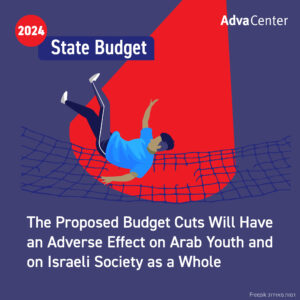
The 15% budget cut in the 5-year plan is liable to negate the progress made to date and to increase the level of violence in Arab society.This is a decisive moment in Israel’s responsibility for Palestinian society – and for Israel as a whole.
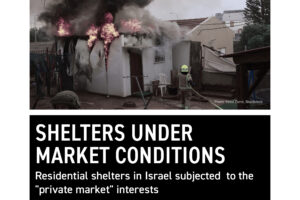
The level of protection of the population is affected, among other things, by discriminatory planning policies and unequal allocation of resources. Addressing the challenge of safeguarding residential apartments in Israel requires an integrated strategy which will be devoid of profit-driven motives and based on direct state investment
Neglect of residents of the unrecognized villages is outrageous. The security threat prevents Bedouin citizens residing in the Negev from purchasing necessities, thus creating a threat of food insecurity and even hunger, which is liable to exacerbate if the present war continues
Don't miss our latest updates